

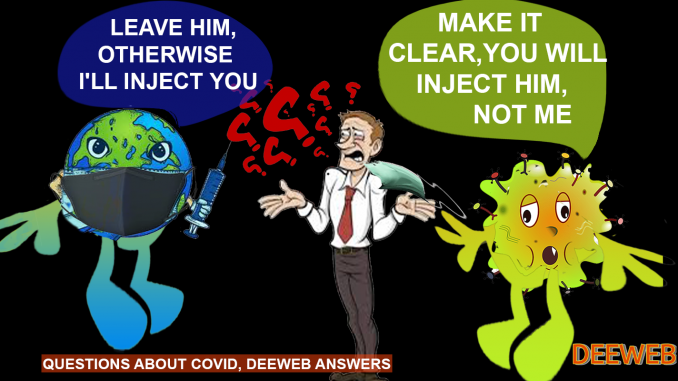
This article show manyquesions answered about Coronavirus. The pandemic so called Coronavirus, has gone so far that has claimed innocent lives. Of course, that leaves the living with so many questions to answer. Deeweb Marketing do a lot of research to help you get these answers, not to promise them all, though, but we do our best to get you the answers for free.
Some of these questions are as follows:
Questions About Vaccine Answered
What are the side effects of the second COVID or Coronavirus vaccine?
The reported side effects of the COVID-19 vaccines were mainly mild to moderate and of short duration. They include: fever, fatigue, headache, muscle pain, chills, diarrhoea, and injection site pain. The chances of these side effects after vaccination vary depending on the specific COVID-19 vaccine.
Can you still get COVID after vaccine?
Fully vaccinated does not mean “immune to COVID-19”. Although vaccines are powerful, there is still a chance that you will be infected.
Will the covid-19 vaccine prevent me from infecting others?
The researchers found that fully immunized participants were 25 times less likely to test positive for Covid-19 than those who were not vaccinated. In addition, findings like this, indicate that if vaccinated people are so well protected from infection. They are also unlikely to spread the virus.
Will everyone get vaccinated for covid/ Coronavirus?
Although supplies of the COVID-19 vaccine are limited. Healthcare workers at high risk of exposure and older adults should be prioritized for vaccination. But that doesn’t mean it’s mandatory for everyone to be vaccinated. It’s a personal choice and don’t let anyone force you to get a vaccine
Questions About COVID-19 Or Coronavirus Answered
Now let us discuss about questions people ask about Covid 19 or Coronavirus many of the are answered.
What does the word Coronavirus mean?
Any of a group of RNA viruses, that cause a variety of diseases in humans and other animals.
Why is this virus called Coronavirus?
“Corona” means crown in Spanish. And coronavirus is a category of viruses so named because of its appearance — it’s covered by crown-like spikes. According to the Atlanta-based Centres for Disease Control and Prevention.
This name was chosen because the virus is genetically related to the coronavirus responsible for the SARS outbreak of 2003. While related, the two viruses are different. WHO announced “COVID-19” as the name of this new disease. This was researched on on 11 February 2020 following guidelines previously developed with the World Organization for Animal Health (OIE) and the Food and Agriculture Organization of the United Nations
How long does the coronavirus last on surfaces?
It is not certain how long the virus that causes COVID-19 survives on surfaces. But it seems to behave like other coronaviruses. Studies suggest that coronaviruses (including preliminary information on the COVID-19 virus) may persist on surfaces for a few hours or up to several days.
There is no specific treatment for disease caused by a novel coronavirus. However, many of the symptoms can be treated and therefore treatment based on the patient’s clinical condition.
Leave a Reply